In 2026, the world of search is evolving with the increasing dominance of AI-powered search engines and traditional Google search. As artificial intelligence (AI) continues to shape how users interact with search engines, businesses and digital marketers need to adapt their strategies to benefit from both worlds.
In this guide, we will discuss how you can effectively combine Google’s traditional search optimization (SEO) with AI search strategies to drive more traffic to your website. From understanding the role of AI search to actionable SEO and AEO techniques, this article will help you stay ahead in the ever-changing search landscape.
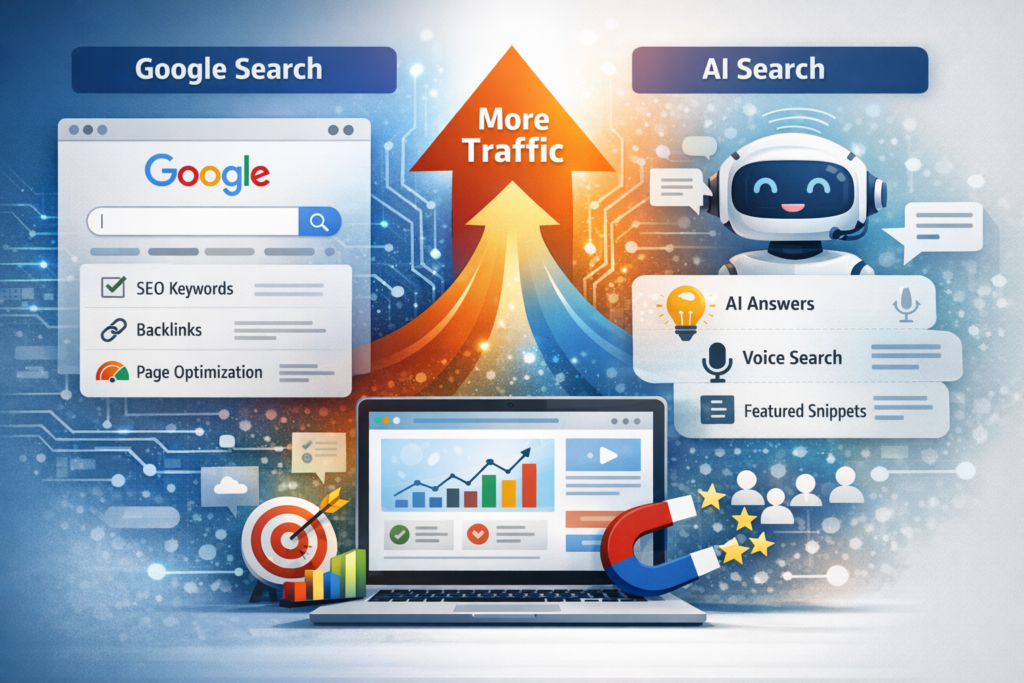
Understanding the Two Worlds of Search: Google & AI
Google Search – The Traditional Powerhouse
Google’s search engine continues to be the most widely used platform globally. It operates primarily on algorithms that rank web pages based on keyword relevance, backlinks, user experience, and many other factors.
Key Google SEO Factors for 2026
- Keywords: Use long-tail and short-tail keywords naturally in your content.
- Backlinks: Build authoritative backlinks from trusted websites to improve your site’s authority.
- Mobile Optimization: Ensure your website is responsive and optimized for mobile devices, as mobile-first indexing is a critical factor in Google’s rankings.
- Page Speed: Faster load times contribute to better rankings, particularly on mobile devices.
- User Experience (UX): Make sure your site is easy to navigate and offers a seamless browsing experience.
Optimizing Your Content for Google Search in 2026
- Focus on quality content: Google values in-depth, well-researched content that answers users’ questions.
- Use structured data (schema markup): This helps search engines understand your content better and can boost your chances of appearing in rich snippets.
AI Search – The Emerging Frontier
As AI-powered search engines, like chatbots, virtual assistants, and platforms using Answer Engine Optimization (AEO), continue to evolve, they are becoming a significant part of how users interact with search results.
Unlike Google, which traditionally directs users to web pages, AI search engines aim to provide direct answers via featured snippets, voice search results, and even AI assistants like Google Assistant and Amazon Alexa.
The Key to AEO (Answer Engine Optimization)
- Featured Snippets: These are concise answers that appear at the top of Google’s search results.
- Voice Search Optimization: With the rise of virtual assistants, optimizing content for voice search is becoming more important.
- Long-tail Conversational Keywords: Since voice searches are often more conversational, using these types of keywords in your content is critical for appearing in AI search results.
How to Combine Google & AI Search for Maximum Traffic
Best Strategies to Optimize for Both Google & AI Search
To fully capitalize on both Google and AI search results, here’s how you can integrate traditional SEO and AEO strategies effectively.
1. Focus on High-Quality Content with SEO and AEO in Mind
The most effective way to combine both worlds is by creating content that serves both traditional SEO and AI search. Aim to answer users’ questions directly while optimizing your content for relevant keywords.
- For Google SEO: Incorporate targeted keywords naturally throughout your content and make sure to follow Google’s on-page optimization guidelines.
- For AI Search: Structure your content with FAQ sections, bullet points, and concise answers to increase your chances of appearing in featured snippets and voice search results.
2. Implement Structured Data & Schema Markup
Adding schema markup to your content provides search engines and AI systems with better context about your content. This improves your chances of appearing in rich results, featured snippets, and other AI-powered search results.
- How to use schema markup: Use structured data to label your content, such as reviews, products, events, or articles, helping AI search engines quickly interpret your content.
3. Optimize for Mobile & Voice Search
AI search is often voice-driven, especially through virtual assistants. To ensure your content is accessible through AI search, optimize for voice search by focusing on natural language queries and long-tail keywords.
- Mobile Optimization: Since most voice searches are done on mobile devices, ensure your website is mobile-friendly to improve your rankings in both Google and AI-powered searches.
- Voice Search Optimization: Use conversational keywords and questions that users are likely to ask, such as “How to optimize my website for Google and voice search?”
4. Leverage Video Content for Google & AI Search
Video content continues to be an effective way to engage users. Both Google and AI-powered search engines, like YouTube and voice assistants, are increasingly relying on video content for search results.
- For Google: Optimize your videos with relevant keywords in the title, description, and tags.
- For AI Search: Use video content to provide direct answers to commonly asked questions, as this content is likely to appear in featured snippets or voice search results.
5. Improve User Engagement & UX
Google and AI search engines prioritize websites that offer a seamless user experience. Make sure your site is easy to navigate, fast-loading, and provides clear paths for users to find the information they’re looking for.
Conclusion: Drive Traffic by Combining Google & AI Search
As we move further into 2026, combining Google SEO and AI search optimization (AEO) is essential for driving more traffic to your website. By following the strategies outlined in this guide, you can leverage both traditional search and AI-driven search engines to boost your visibility, engage users, and achieve long-term traffic growth.
Optimize your content for both worlds, ensure your site provides a seamless experience, and continue to adapt to the ever-evolving digital search landscape. With the right approach, you can dominate both Google and AI search results and unlock more traffic for your website in 2026.