Facebook is a dominant platform for advertisers, providing access to millions of active users in Bangladesh. As more businesses recognize its potential, the competition grows, and so does the cost of advertising. It’s essential to understand the dynamics of Facebook’s advertising model to leverage it effectively. Without a strategic approach, businesses can end up spending more than necessary, which can impact their overall marketing budget and ROI.
How Facebook Determines Advertising Costs
Before diving into strategies, it’s important to understand how Facebook ads cost is determined. Facebook uses an auction system where you compete with other advertisers to show your ads to your target audience. The cost of your ads is influenced by several factors, including:
1. Target Audience: The More Competitive, the Higher the Cost
Target Audience: The more specific and competitive your audience, the higher the cost. Understanding your target audience’s preferences and behaviors can help create more personalized and engaging ads. The more refined and targeted your audience, the better your ad performance, which can lead to reduced costs.
2. Ad Placement: Choosing the Most Cost-Effective Positions
Ad Placement: Different placements have different costs. For instance, ads on the Facebook News Feed may cost more than those in Stories. It’s crucial to test various placements to find which delivers the best results for your specific audience. By identifying the most cost-effective placements, you can allocate your budget more efficiently.
3. Ad Quality & Relevance Score: Key Factors in Reducing Costs
Ad Quality and Relevance: Facebook rewards high-quality and relevant ads with lower costs. The relevance score of your ad is determined by how well your ad resonates with your audience, including engagement, feedback, and overall quality. High relevance scores can significantly reduce your advertising costs by ensuring your ads are seen by the right people.
4. Bidding Strategy: Selecting the Right Bid for Your Goals
Bidding Strategy: Your chosen bidding strategy can impact how much you pay for ads. Facebook offers different bidding strategies, such as cost-per-click (CPC), cost-per-impression (CPM), and cost-per-action (CPA). Choosing the right strategy based on your campaign goals can help control costs while achieving your desired outcomes.
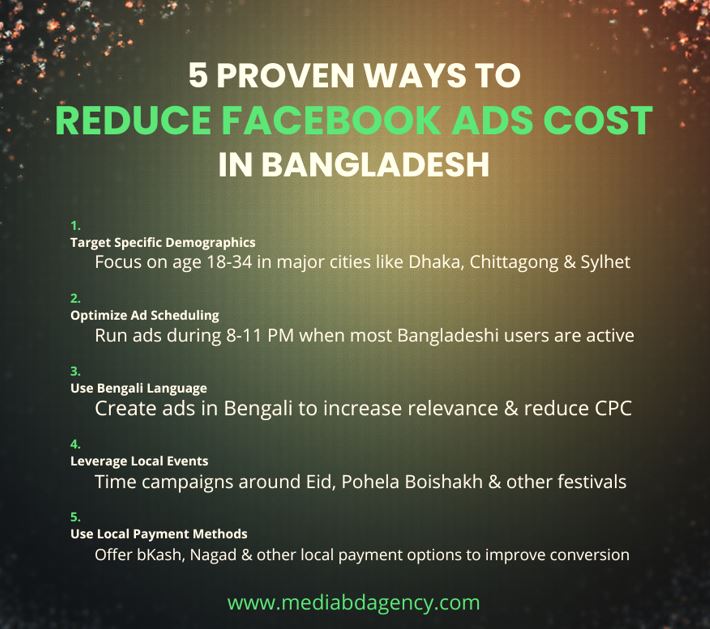
Creating a Well-Defined Target Audience
Creating a well-defined target audience is crucial for reducing costs. The more specific you are, the less competition you’ll face, which can lead to lower costs. Use Facebook’s audience insights to understand your potential customers’ demographics, interests, and behaviors.
Understanding Audience Demographics
Demographics: Age, gender, and location. Tailoring your ads to the demographic characteristics of your audience can help create more relevant and engaging messages. By focusing on specific demographic segments, you can reduce wasted ad spend on uninterested users.
Targeting Based on Interests
Interests: Hobbies, brands, and media consumed by your audience. By aligning your ad content with the interests of your audience, you can increase engagement and reduce costs. Interest-based targeting allows you to connect with users who are more likely to be interested in your products or services.
Analyzing Audience Behaviors
Behaviors: Online shopping habits, device usage, etc. Understanding how your audience interacts online can help you create more tailored ad experiences. By leveraging behavioral data, you can reach users at the right time and on the right device, optimizing your ad spend.
Using Facebook Audience Insights Effectively
Facebook Audience Insights is a powerful tool that provides data about your target audience. Use this tool to refine your audience and discover new targeting opportunities. By understanding the behavior and preferences of your audience, you can create more relevant ads, which can lower your costs.
Audience Insights allows you to delve deeper into the characteristics of your audience, uncovering valuable information that can inform your ad strategy. This tool can help you identify trends and patterns in user behavior, enabling you to create more personalized and effective ads. By leveraging these insights, you can make data-driven decisions that enhance your targeting efforts and reduce advertising costs.
Optimizing Facebook Ad Placements
Facebook offers various ad placements, and each comes with different costs. Use automatic placements to let Facebook optimize where your ads appear based on performance. However, if you notice certain placements consistently underperform, consider excluding them to save money.
Testing and analyzing different ad placements can help you determine which ones deliver the best ROI. By focusing on high-performing placements, you can optimize your budget and improve ad performance. Additionally, regularly reviewing placement data can help you adapt to changes in user behavior, ensuring your ads are always shown in the most cost-effective locations.
Improving Ad Quality & Relevance
Ad quality and relevance scores are crucial for cost-effective ads. Facebook rewards ads that engage and resonate with their audience. To improve your ad quality:
-
Create Engaging Content: Use high-quality images or videos that capture attention. Visually appealing content is more likely to engage users and encourage interaction, leading to better ad performance and lower costs.
-
Craft Compelling Copy: Write clear and persuasive text that speaks to your audience’s needs. Well-written copy can convey your message effectively and encourage users to take action, improving your ad’s relevance and engagement.
-
Use a Strong Call-to-Action (CTA): Encourage users to take the desired action with a clear CTA. A strong CTA can drive conversions and enhance the effectiveness of your ads, resulting in lower advertising costs.
A/B Testing for Better Ad Performance
Continuous testing is key to optimizing ad performance and reducing costs. Experiment with different ad formats, visuals, and copy to see what resonates best with your audience. Use A/B testing to compare variations and refine your ads for better results.
Regular experimentation allows you to identify what works and what doesn’t, enabling you to optimize your ad strategy continuously. By testing various elements of your ads, you can discover new ways to engage your audience and reduce costs. This iterative approach ensures your ads remain relevant and effective, maximizing your return on investment.
Choosing the Right Bidding Strategy
Your bidding strategy can significantly impact your ad costs. Facebook offers several bidding options, such as cost-per-click (CPC) and cost-per-impression (CPM). Regularly monitor your campaigns and adjust your bids based on performance to ensure you’re not overspending.
Adapting your bidding strategy to match your campaign goals and performance can help you manage costs effectively. By analyzing your campaign data, you can make informed decisions about bid adjustments, ensuring you achieve the best possible results within your budget. Continuous monitoring and optimization of your bidding strategy can lead to more efficient ad spending and improved outcomes.
Setting a Realistic Ad Budget
Setting a realistic budget is essential for managing your ad spending. Start with a budget you are comfortable with and gradually increase it as you see positive results. Remember, it’s important to balance budget constraints with the need for effective ad reach.
A well-defined budget allows you to allocate resources effectively and avoid overspending. By setting realistic expectations and monitoring your spending, you can ensure your ad campaigns remain sustainable and cost-effective. Regularly reviewing your budget and adjusting it based on performance can help you achieve your marketing objectives without exceeding your financial limits.
Using Retargeting to Reduce Costs
Retargeting is a cost-effective strategy to engage users who have previously interacted with your brand. By targeting warm leads, you can increase conversion rates at a lower cost than targeting cold audiences.
Retargeting allows you to reconnect with users who have shown interest in your products or services, increasing the likelihood of conversion. By focusing on these warm leads, you can improve your ad performance and reduce costs. Additionally, retargeting can help reinforce brand awareness and encourage repeat business, further enhancing your marketing efforts.
Using Lookalike Audiences to Expand Reach
Lookalike audiences allow you to reach new potential customers who share similar characteristics with your existing customers. This can be an efficient way to expand your reach without significantly increasing costs.
By leveraging lookalike audiences, you can tap into new markets and grow your customer base. These audiences are more likely to be interested in your offerings, increasing the effectiveness of your ads. Expanding your reach through lookalike audiences can lead to more cost-effective ad campaigns and a higher return on investment.
Scheduling Ads for Maximum Impact
Scheduling your ads to run during peak times when your audience is most active can help reduce costs. Analyze your audience’s behavior to determine the best times to run your ads for maximum impact.
By aligning your ad schedule with your audience’s activity patterns, you can ensure your ads are seen when they are most likely to engage. This targeted approach can lead to higher engagement rates and lower costs. Additionally, regularly reviewing and adjusting your ad schedule can help you stay responsive to changes in user behavior, optimizing your ad performance.
Optimizing Your Ads for Mobile Users
With a significant portion of Facebook users accessing the platform via mobile devices, optimizing your ads for mobile is crucial. Ensure your ad visuals and landing pages are mobile-friendly for the best user experience.
Mobile optimization is essential for reaching users on-the-go and delivering seamless ad experiences. By ensuring your ads and landing pages are responsive and load quickly on mobile devices, you can improve user engagement and reduce bounce rates. Focusing on mobile optimization can lead to more effective ad campaigns and better overall results.
Final Thoughts: Reducing Facebook Ad Costs in Bangladesh
By implementing these strategies, you can effectively reduce Facebook ads cost in Bangladesh while achieving your marketing objectives. Remember, the key is to continuously monitor your campaigns, test different approaches, and adjust your strategies based on data insights.
With careful planning and execution, you can optimize ad spending and create cost-effective ads that deliver excellent results for your business. Embracing a data-driven approach and staying adaptable to changes in the advertising landscape will ensure your Facebook marketing efforts remain successful and sustainable.